The clothing of Taiwan’s indigenous people represents the prominent features of each tribe. It symbolizes cultural ideas and beliefs with vivid colors and diverse styles. Every indigenous tribe has its own unique clothing style and characteristics. For textile production, all indigenous groups used a squared cloth system. This means they used a horizontal loom with a strap to weave exquisite and beautiful cloth, and then sewed pieces of cloth together to make an integrated garment. A considerable amount of pendants are used by all the indigenous people in Taiwan to make attractive clothing. Shells, buttons, lazurite beads and so forth are added not only for decoration, but also as symbols of status and wealth. The clothing carries a traditional aesthetic meaning. All the colors, patterns and designs signify artistic property and social significance. Trade with the Han had an overwhelming impact on the clothing of Taiwan’s indigenous people. The materials and styles have gradually changed. Before the Japanese colonial period, most clothing was made of linen. Later, imported cotton cloth and printed calico were greatly used. Recently, chemical fibers have been replacing the original textile. Clothes that were traditionally separate pieces have changed into light and convenient suits. All these changes have been made to accommodate time and environmental constrictions. However, the clothing of Taiwan’s indigenous people has not vanished due to the influences of Han culture and modernization. Thanks to excellent preservation of festivities and customs, traditional clothing can be passed on to the next generation and carry new cultural significance. In certain festivities or ceremonies, indigenous people fully express their ethnic identity by continuing to wear their traditional clothing.
6. JAPAN
There are typically two types of clothing that the Japanese wear: the Japanese clothing , such as kimonos, and Western clothing. Japanese traditional fashion combines multiple styles that reflect early Japan’s visual culture. It represents the culture’s visible artistic and traditional values and joins them together to create a form of fashion recognizable to foreign cultures. The most well known form of Japanese traditional fashion is the kimono Although the traditional wear for Japan became popularized during the Heian period (794-1185) and was worn casually at the time, it is now rare to find people doing so due to the difficult process associated with the wardrobe. Each type of garment corresponds to a special occasion, such as festivals, ceremonies, or weddings. The materials, colors, and layers used for the clothing differentiate them and their significance, as the looks are also often worn seasonally. The clothing that embodies the culture represents Japan’s traditional values that remain in their community to this day. As it became popular in the Western world, there has been controversy regarding cultural appropriation with the costumes of the culture, specifically the “Kimono Wednesday” event held at the Boston Museum of Arts.
Compared to Western dress, the kimono tends to limit one’s movement, and it takes more time to put on properly. In the summer, however, a more easily worn, lightweight informal kimono known as a yukata is worn by children and young adults at festivals, fireworks displays, and other special occasions. In everyday life, though, young people tend to prefer clothing that is easier to move around in, like T-shirts, jeans, polo shirts, and sweat suits.
5.CHINA
The Hanfu, Zhongshan suit (Mao suit), Tang suit, and cheongsam (qipao) are the four most distinctive types of traditional Chinese clothing.
1. Hanfu
The Hanfu ‘Han clothing’ — the majority of Chinese are of Han ethnicity) is the oldest of China’s traditional clothes. Legend traces it back to over 4,000 years ago when Huangdi’s consort, Leizu, made cloth with silk. It was constantly improved throughout several dynasties. Until the Han Dynasty, the Hanfu was adopted and vigorously promoted by the ruling class. It then became the national clothing of the Han ethnic people. It also had a far-reaching influence on neighboring Asian countries, such as Korea, Japan, and Vietnam.
2. Zhongshan Suit
The Zhongshan suit, also known as the Mao suit overseas, is a type of male attire. It was first advocated by Dr Sun Yat-sen (i.e. Sun Zhongshan, hence Zhongshan suit) after the founding of the Republic of China in 1912.
Later on, after Chairman Mao had been seen wearing it in public numerous times, this outfit gained the name “Mao suit”. Read more on the Zhongshan suit.
3. Tang Suit
The Tang suit often refers to a type of Chinese jacket rather than the clothing of the Tang Dynasty (618–907). This name came from the overseas Chinese.
As the Tang Empire was famous for being prosperous and powerful in the world, foreigners called the overseas Chinese people “the Tang people” and the clothes they wore were called “Tang suits” (which has been translated as Tangzhuang ).
4. Cheongsam
The cheongsam evolved from the Manchu women’s changpao (‘long gown’) of the Qing Dynasty (1644–1912). The Manchu ethnic people were also called the Qi people by the Han people; hence their long gown was named qipao (‘Qi gown’).
4.EGYPT
Egyptian clothing was made from locally-sourced materials—as were clothes from all ancient societies. Pastoral nomads created clothing from their livestock. AS one of the earliest agricultural societies, the ancient Egyptians wore light clothes made from linen. Linen is made from flax – a plant which was grown along the Nile.
Once harvested, the flax was soaked in water until soft. The softened flax was then separated into fibres which were beaten before being spun into thread which was then woven into cloth.
Egyptian clothing was made from locally-sourced materials—as were clothes from all ancient societies. Pastoral nomads created clothing from their livestock. As one of the earliest agricultural societies, the ancient Egyptians wore light clothes made from linen. Linen is made from flax – a plant which was grown along the Nile.
Once harvested, the flax was soaked in water until soft. The softened flax was then separated into fibres which were beaten before being spun into thread which was then woven into cloth.
WOMEN
Egyptian women wore full length straight dresses with one or two shoulder straps. During the New Kingdom period it became fashionable for dresses to be pleated or draped. The dresses worn by rich Egyptian women were made from fine transparent linen. Like the men, rich Egyptian women decorated their clothes and wore jewellery and headdresses.
CHILDREN
Ancient Egyptian children did not wear clothes until they were about six years old when they would wear the same clothes as men and women.
The Ancient Egyptians wore jewellery to show their wealth and also because they believed it made them more attractive to the Gods.
They wore rings, ear-rings, bracelets, decorated buttons, necklaces, neck collars and pendants.
Only the very rich could afford jewellery made of gold and precious stones. Ordinary people made jewellery from coloured pottery beads.
1.KOREA
A Hanbok (South Korean) or Joseon-ot (North Korean) is a traditional Korean dress for semi-formal or formal attire during traditional occasions such as festivals, celebrations, and ceremonies. It is characterized by vibrant colours and simple lines without pockets. Although the term literally means “Korean clothing”, hanbok usually refers specifically to clothing of the Joseon period. Korea had a dual clothing tradition in which rulers and aristocrats adopted different kinds of mixed foreign-influenced indigenous styles while commoners preserved a distinct style of indigenous clothing, today known as hanbok.
In the East Asian context, hanbok is considered to be hobok a northern Asian nomadic and Scythians style clothing derived from the Eurasian steppe tradition. From a Sinocentric point of view, hobok, meaning barbarian clothing, is a type of clothing different from the Chinese Hanfu.
The hanbok can trace its origin to nomadic clothing of the Scytho-Siberian cultural sphere, spanning across Siberia from western Asia to Northeast Asia. The earliest evidence of this common style of northern Asia can be found in the Xiongnu burial site of Noin Ula in northern Mongolia, and the earliest evidence of the hanbok’s basic design features is seen in ancient wall murals of Goguryeo before the 3rd century BCE.
Reflecting its nomadic origins in western and northern Asia, hanbok was designed to facilitate ease of movement and also incorporated many shamanistic motifs. From this time, the basic structure of hanbok, namely the jeogori jacket, baji pants, and the chima skirt, were established. Short, tight trousers and tight, waist-length jackets were worn by both men and women during the early years of the Three Kingdoms of Korea period. The basic structure and these basic design features of hanbok remain relatively unchanged to this day.
2.ANTARCTICA
This was the first time in history that people had been to Antarctica and they had to come up with clothing that allowed the exploration of this last place on earth that we discovered and then later to live and work there with the harshest cold climate of all.
The biggest problems were with footwear and moisture retention by clothing and sleeping bags which would freeze hard when removed.
Inuit style fur clothing as used by Amundsen was efficient and already proven. It wasn’t readily available or widespread however and was also expensive and difficult to repair if damaged. Furs and skins were regarded by many as rather primitive or uncivilized and the manner of their use was not well understood. Much experimentation went on with materials, designs, and the layering of different items of clothing. Most garments were made with natural fibers as synthetics were limited in variety and only in their infancy.
People in Antarctica wear different types of clothing depending on the situation, season and what activities they are doing. It is normal to wear long woolen underwear, pants, a shirt and a windproof outer layer when working on the ice during the summer months.
Much of a person’s time in Antarctica is spent inside well-heated buildings on the various research stations, meaning they can wear normal clothing, such as a T-shirt and jeans. However, extra precautions must be taken when going outside in the winter due to the extreme temperatures. Winter expeditions require a person to wear many layers of clothing, covered up by a quilted suit. In fact, wearing multiple layers is always recommended, as it is important to be able to remove layers to prevent overheating and sweating.
3.AFRICA
African clothing is the traditional clothing worn by the people of Africa. In all instances except rural areas these traditional garments have been replaced by Western clothing introduced by European colonialists.
African clothing and fashion is a diverse topic that is able to provide a look into different African cultures. Clothing varies from brightly colored textiles, to abstractly embroidered robes, to colorful beaded bracelets and necklaces. Since Africa is such a large and diverse continent, traditional clothing differs throughout each country. For example, many countries in West Africa have a “distinct regional dress styles that are the products of long-standing textile crafts in weaving, dyeing, and printing”, but these traditions are still able to coexist with western styles. A large contrast in African fashion is between rural and urban societies. Urban societies typically are exposed more to trade and the changing world, while it takes more time for new western trends to get to rural areas.African clothing commonly refers to the traditional clothing worn by the people of Africa. Different tribes throughout the continent pride themselves on their national dress which they use for ceremonies an special occasions.There are many varied styles of dress and the type of cloth plays an integral role in fashioning the garment. The fabric often reflects the society in general as well as the status of individuals or groups within that community. In some instances traditional robes have been replaced or influenced by foreign cultures, like colonial impact or western popular dress code.
10. FRENCH MUSIC AND DANCE
France has a very rich and varied dance tradition and almost every region of France has its own distinct forms of music and dances.
French are by nature very fond of music and dance, and are credited to invent several of world-famous dances.

French Classical Music
French classical music is one of the most known by its beauty and of course by its renowned composers such as Pérotin, Machaut , Josquin de, Roussel, Milhaud, Poulenc and Messiaen.
French Hip Hop Music
Although, Hip Hop is an American music gender and most of the famous singers are American, French is an important country where Hip Hop was developed in a great force.
French Pop Music
Pop music currently has many famous interpreters such as Alizée, Natasha Bedingfield and Cerena, although they are not as popular in America as in France, their songs are fantastic and they have won many music awards.
French Rock Music
French Rock Music is produced in France and is a style of rock singed in French.
Carols are simple chain dances in which a linked line of dancers moved forwards, walking, running or skipping to their own singing. Other popular traditional dance types in France include Canarie, Forlane, Gavotte, Gigue, Menuet and Sarabande.
Bourrée Dance
The bourrée, one of the most popular folk dances of France, comes in many regional varieties.The bourrée is a line dance, with a line of men facing and dancing with a line of women.
Polynesian Dance
French Polynesia is a group of islands in the South Pacific including Tahiti, Moorea and Bora Bora.
 Social dance
Other dance styles, such as the Italian and Spanish dances of the period are much less well studied than either English country dance or the French style.
Basse Dance
The French basse danse comes in two catagories: regular and irregular. The difference is that a regular basse dance contains 80 bars in its main part. In every four bars, or one quaternion, dancers perform either a double step, two single steps, a step called a reprise, or a branle, a kind of chain dance in which dancers join together and move side to side, either in a circle on in a serpentine pattern. Irregular basse dances deviate from this structure.
G. PavithaSri
B.Sc Psychology
9. JAPANESE MUSIC AND DANCE
The earliest forms of music were drums and flute music accompanying the kagura shrine dances.
Meanwhile with the introduction of Buddhism to Japan in the 6th century, Buddhist rites and liturgical chants gave rise to kabuki music of the Edo period (1600-1868).
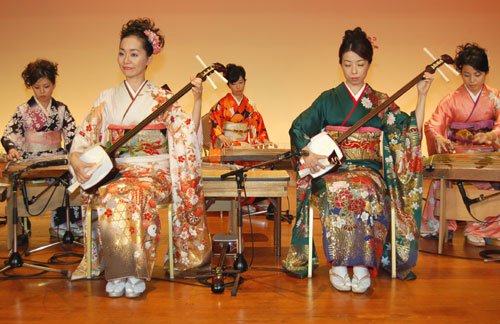
From the 17th century, the shamisen (three-stringed plucked lute) came to the fore, providing the lively rhythm that dominated the sounds of the popular kabuki and bunraku theaters.
Japanese musical instruments are dominated by plucked string, flute and percussion instruments.
Every region of Japan has its own folksongs – minyo – which, depending on daily activities of the traditional community, may be rice-planting songs, boatman’s songs, sake-making songs, or grass-cutting songs, plus a variety of songs sung at parties.
Among folk music styles, Okinawan music is experiencing a strong revival.
Japanese Dance
There is a tremendous diversity in traditional Japanese dance, from court and religious dance to the ritualistic noh dance-drama and theatrical kabuki dance. In modern times, Japan’s avant-garde butoh dance has also attracted international interest.
Historically, kagura (dance of the gods) is the oldest form of dance in Japan. Originally performed by shamans, its influence is perceived in all Shinto dances performed at shrines today to appease or attract the favor of the deities.
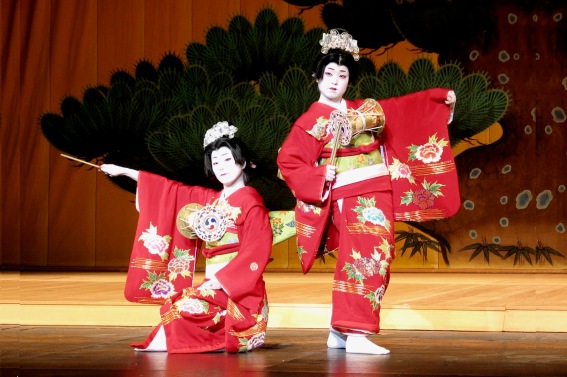
Shosagoto dances (originally for the roles of onnagata female impersonators) became the most important type of kabuki dance, differentiated according to whether a lyrical (nagauta) or narrative (tokiwazu-bushi, tomimoto-bushi, kiyomoto-bushi) style of music was used to accompany it.
In the modern era, Fujikage Shizue (1880-1966) established the Shinbuyo (New Dance) movement under the influence of Western dance, which gave ordinary people the opportunity to perform kabuki dance as an independent art form. This led to a proliferation of dance schools (about 168 today) where pupils are mostly women.
G. PavithaSri
B.Sc Psychology
8. BRAZILIAN MUSIC AND DANCE
The music of Brazil encompasses various regional musical styles influenced by African, European and Amerindian forms.
Brazilian music is a unique blend of European harmony and melody, African rhythms along with Native American culture. How they all came together to form the distinctive sound that is today known as “Brazilian” music is a long story. 
The rhythmic vitality of Brazilian music stems from the Native Americans, who accompanied their religious rituals with an exotic blend of rattlers, shakers and panpipes.
Slowly a passion for gorgeous melody began to surface in Brazil. During the 1930s and 40s, romantic songs from Brazil began to appear in North America. In 1958, the brand-new sound called bossa novarocked the Brazilian music scene and eventually the rest of the world.
Like the music and song of the South American country of Brazil, its dance is varied and complex; hailing from centuries of external influences coupled with the deeply entrenched cultures of the local Amerindian tribes.

The Samba
When the European colonisers settled in Brazil in the time between the 16th to the 19th centuries, they brought into the country hordes of African slaves. These Africans had their own customs, traditions and cultures; many of which were in the form of song, dance and music.
The Capoeira
This dance is believed originally to have been a form of martial arts that was also accompanied by music. It too has its roots in the African cultures.
The Lundu
Although this dance form was most popular during the 1600’s and 1700’s, it remains a common, well-loved art.
The Forro
This is one of the more varied dances in terms of the different styles that fall under its one name. It is particularly popular in Northeastern Brazil, and is a synchronised set of movements that need to be danced with a partner.
Despite the fact that these dances have evolved enormously over time and have their roots in the meeting of a number of very different cultures, they have now become an integral part of the fascinating culture that is so uniquely Brazil’s.

G. PavithaSri
B.Sc Psychology
 Group 9 English